KGS expands research, laboratory space for rock core, critical materials analysis

LAWRENCE — Industry executives, state policymakers and University of Kansas leadership joined the Kansas Geological Survey on Nov. 6 for a ceremonial ribbon-cutting of the newly renovated Watney CORELAB, which includes a 5,500-square-foot expansion of the existing laboratory space. The celebration centered on the KGS Drill Core Library represents a milestone toward the institution’s goal of becoming the premier hub for rock core and critical materials analysis in the Midcontinent.
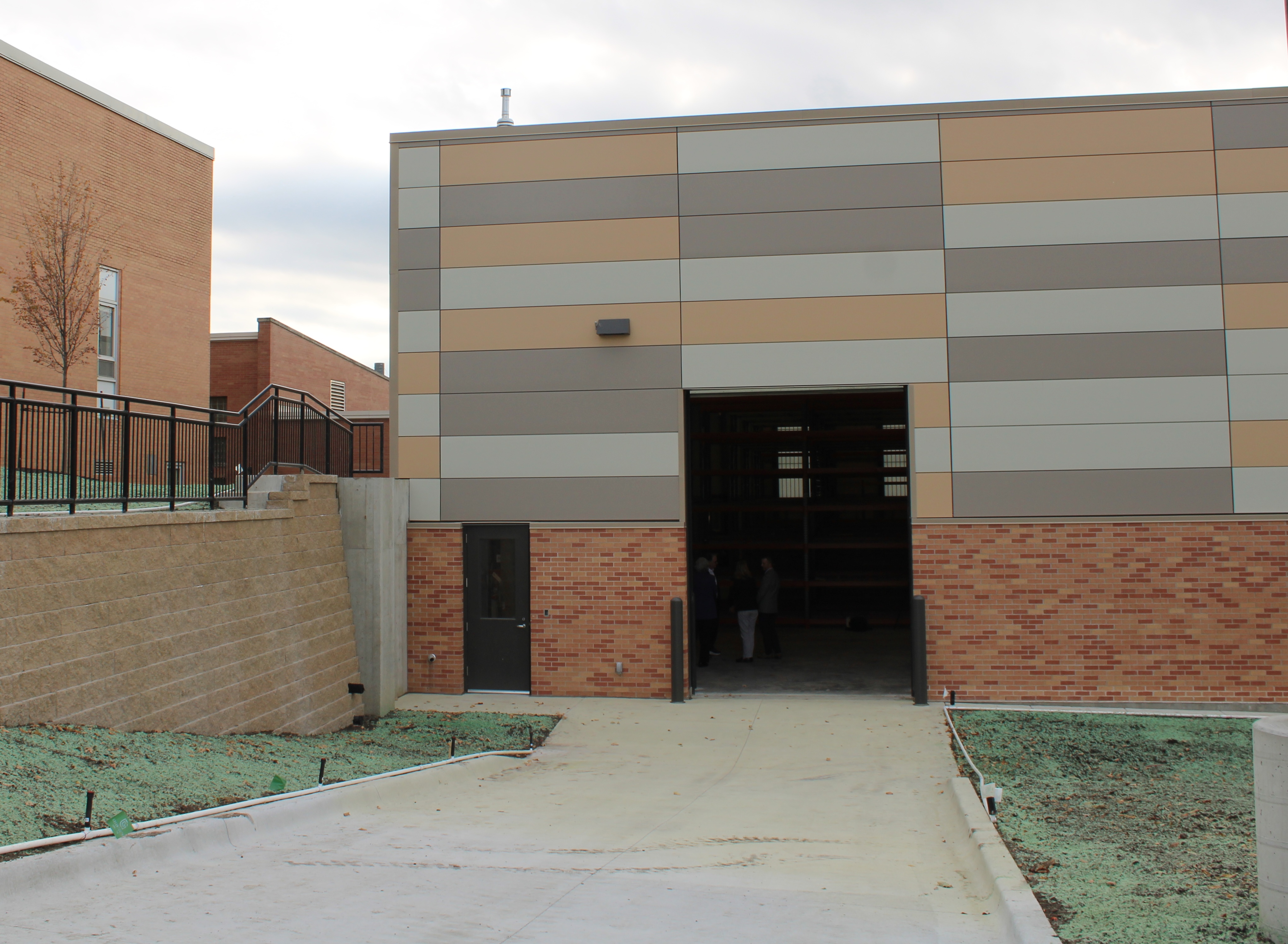
The new building in the West District of KU’s Lawrence campus more than doubles the amount of space dedicated to preserving and storing the state’s extensive collection of rock core maintained by the Kansas Geological Survey. It also more than doubles the laboratory space scientists and engineers use to analyze these materials and was designed with future technologies and possibilities in mind.
“Rock core is our window into the subsurface and is essential for evaluating a range of key characteristics from critical mineral and critical materials potential to reservoir and aquifer quality,” said Jay Kalbas, KGS director and state geologist. “With this expansion, we’ve built a purpose-made space to co-locate both the priceless subsurface materials and the specialized analytical instruments necessary for materials assessments. The applied research we will conduct in the expanded laboratory will support the Kansas economy, allowing us to collaborate with state and federal agencies and the private sector to characterize potential in the Kansas subsurface.”
Instruments that allow detailed study of materials — advanced core scanning, hyperspectral imaging and X-ray diffractometry, among others — will be housed in the new laboratory space within the Watney CORELAB.
“The newly renovated Watney CORELAB enables the Kansas Geological Survey to expand its support of Kansas communities, businesses and policymakers while also making new discoveries and training the next generation of scientists,” said Chancellor Douglas A. Girod. “It’s this three-part mission of education, service and research that makes the Kansas Geological Survey a point of pride for the University of Kansas and a point of strength for the state of Kansas. We are grateful to the elected officials and partners who made this project possible, and we look forward to the meaningful scientific work and economic development this lab will facilitate in the years ahead.”

The addition honors the late Lynn Watney, a longtime KGS senior scientist who conducted energy research throughout the state and who was responsible for establishing the core repository. Watney’s wife, Karen Watney, and daughter, Chris Watney, participated in the ribbon-cutting ceremony.
The building provides light climate control for sensitive samples, ensuring long-term preservation for future research; improves the speed and ease of accessing boxes of core; and creates distinct laboratory areas for core analysis and sampling.
“This project represents years of planning and collaboration,” said Nikki Potter, KGS associate director. “It’s a major step in strengthening Kansas’ role in energy and mineral research. This facility will allow us to continue to build partnerships across state and federal agencies and industries.”
Core comprises a cylinder of rock usually 2 inches to 4 inches in diameter and hundreds or even thousands of feet long. Each provides a window into the subsurface that allows geologists to gain an understanding of how natural resources — including oil and natural gas, groundwater and critical minerals — are distributed and move through the subsurface. Scientists analyze the rock layers in core to determine their mineral makeup, ages, material properties and the environments in which they formed.
Funds for the building, designed by PGAV Architects in Westwood, came from a one-time state appropriation of $3.8 million. Additional financing from private donors and federal grant funding agencies supports the analytical capabilities of the laboratory space.
About the KGS Drill Core Library
The KGS Drill Core Library, one of the largest public core depositories in the United States, preserves cores, many donated by companies for safe storage, from 6,500 wells in Kansas for future study. The library contains more than 73,000 boxes of rock. It accepts donations of Kansas core and drills its own for research and service work.
Cores in the KGS Drill Core Library are accessible to the public. Olivia Jones, KGS assistant scientist and core library manager, manages the collection and assists scientists and members of the public who request access to specific core.
About the Kansas Geological Survey
The Kansas Geological Survey is a nonregulatory research and service division of KU. KGS scientists study and provide information about the state’s geologic resources and hazards, including groundwater, oil and natural gas, rocks and minerals, and earthquakes.