
SPECIMANIA
Rules of Play & Background Information


The Premise
You are a curator seeking to collect fossils for three museum exhibits showcasing the diverse ancient ecosystems and organisms that sculpted the landscape of Kansas. Your competitors are also vying for fossils for their museums, so you must work quickly to complete your collection and be the first to open your new exhibits!
How to Win
Be the first to collect FIVE* unique fossils for EACH of your three exhibits.
Setup (2–5 players)
- Remove the Curator cards and the Exhibit cards from the deck.
- Deal a random Curator card to each player.
- Give each player the three Exhibit cards referenced on their Curator card (see example below).
- Place your Curator card in front of you. Flip it over to see the turn order.
- Shuffle the main deck and deal eight cards to each player.
- Determine who most recently saw a fossil—that player goes first!
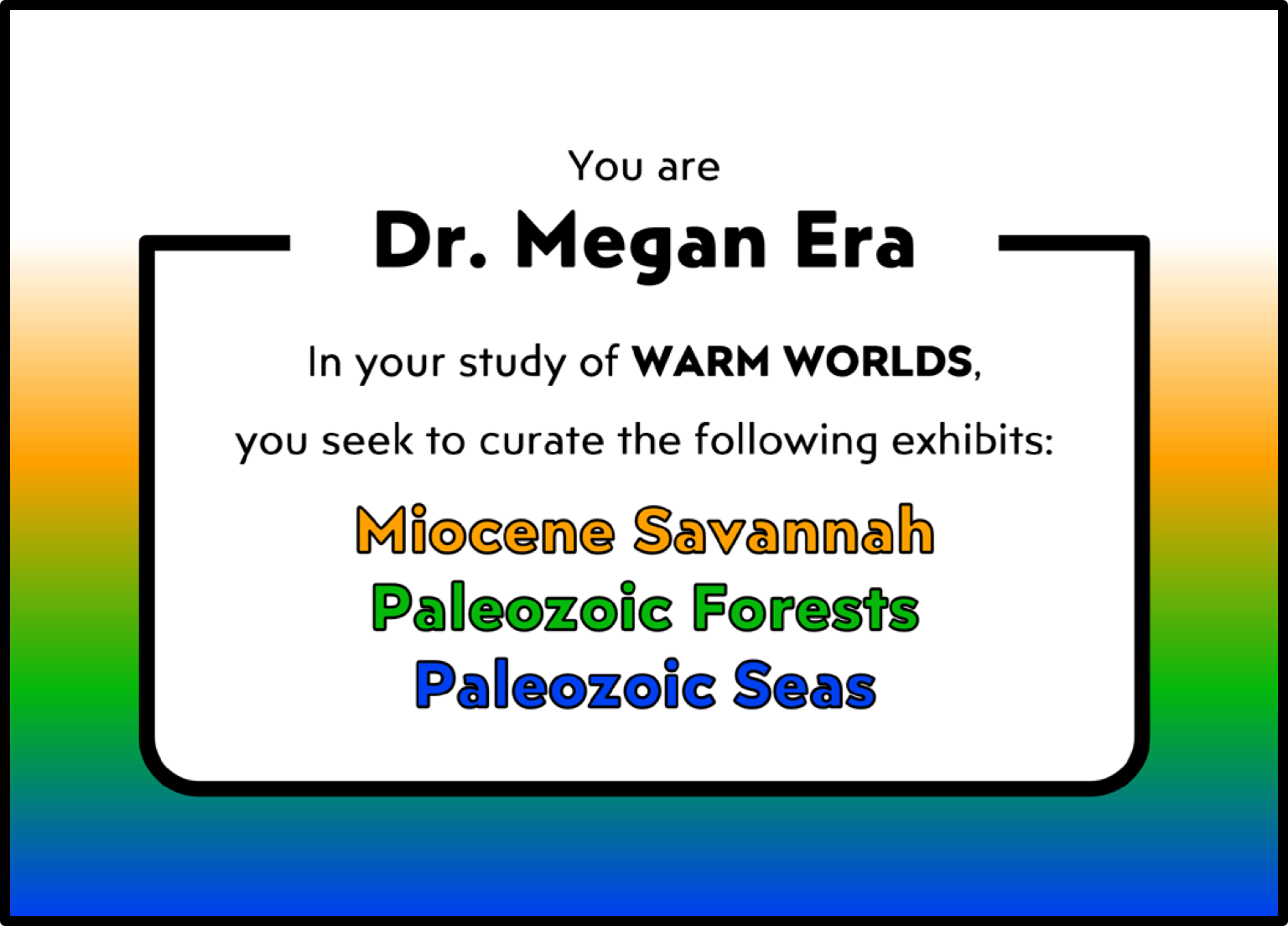
Curator card
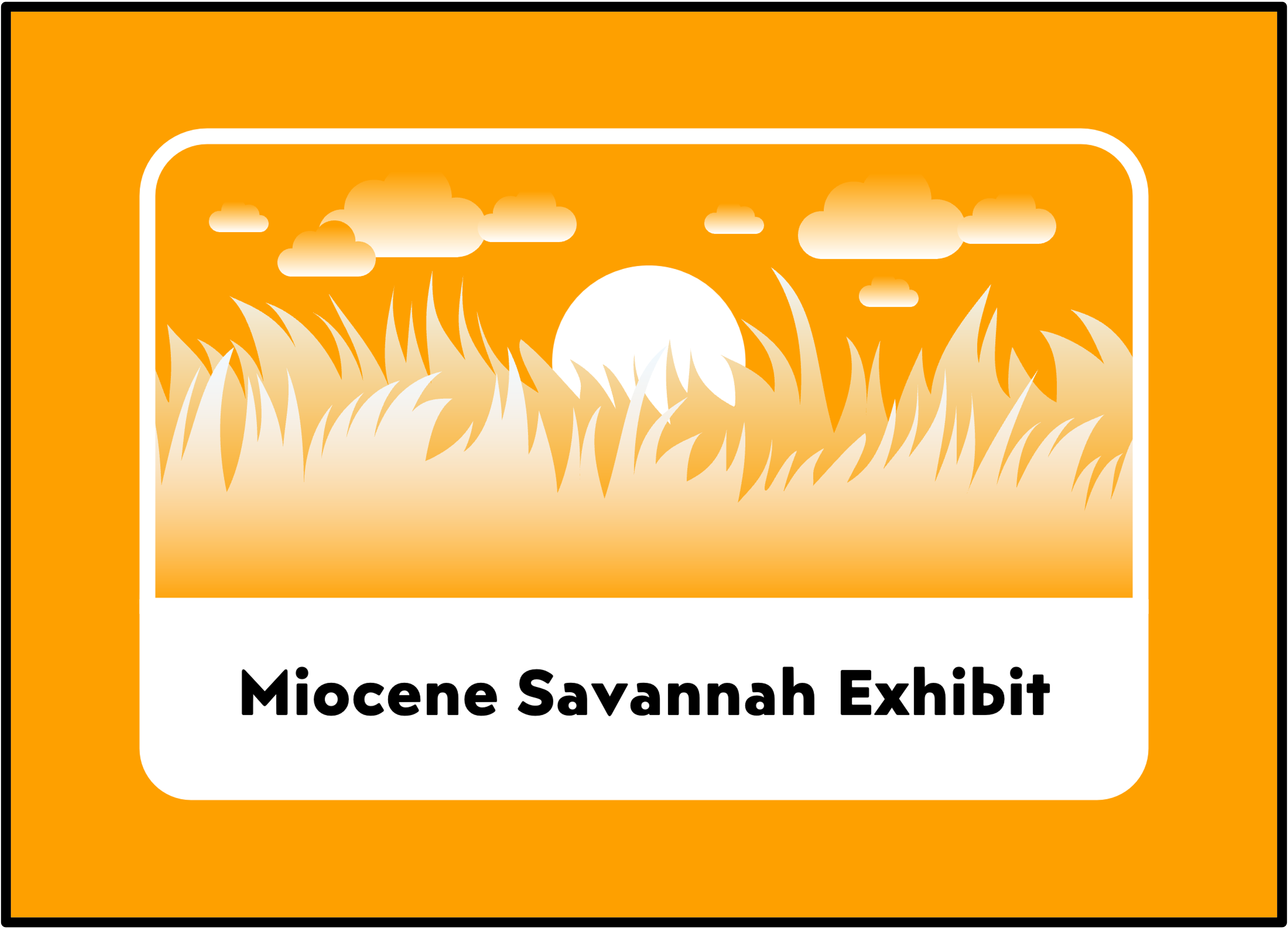
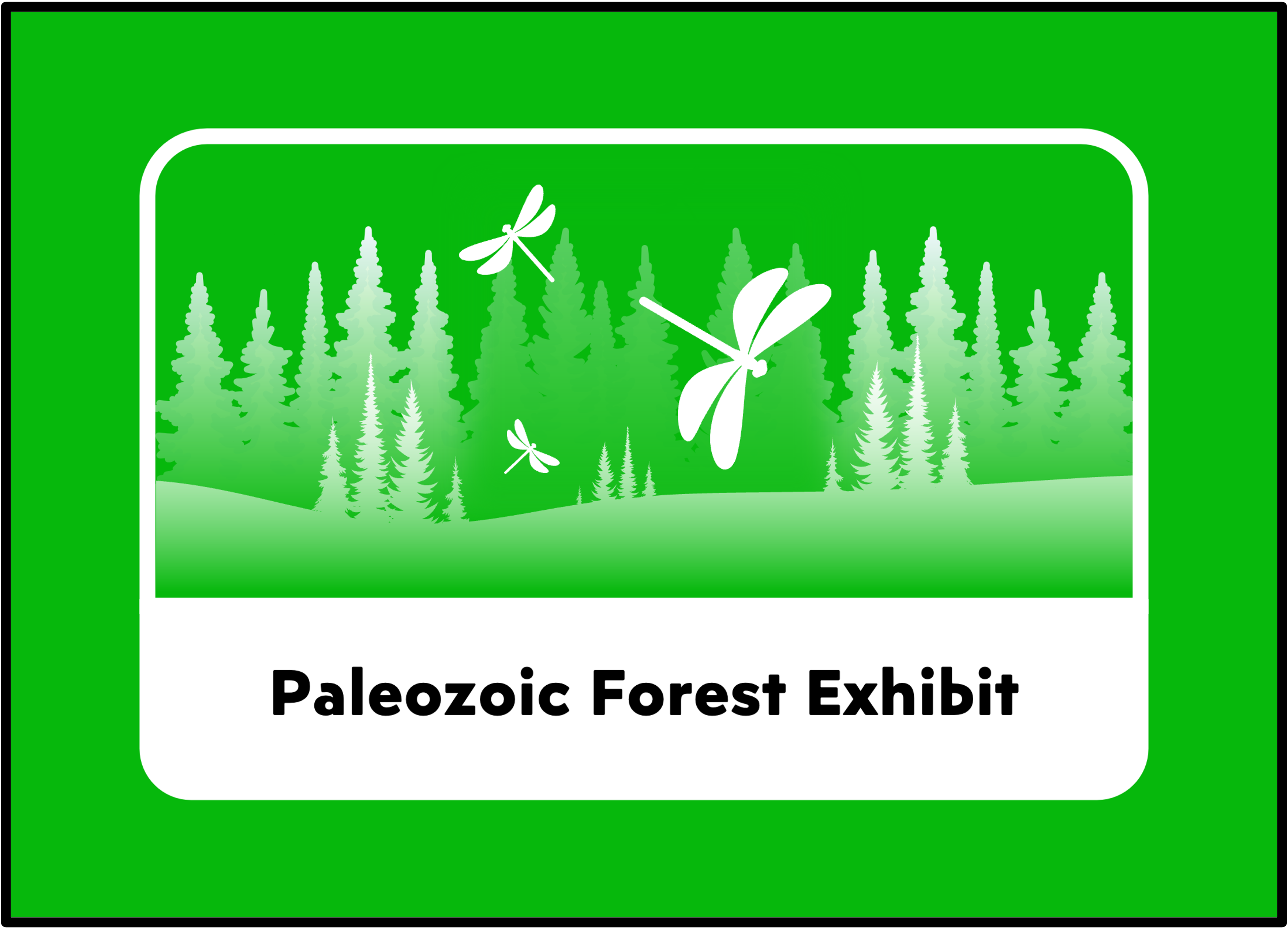
Exhibit cards
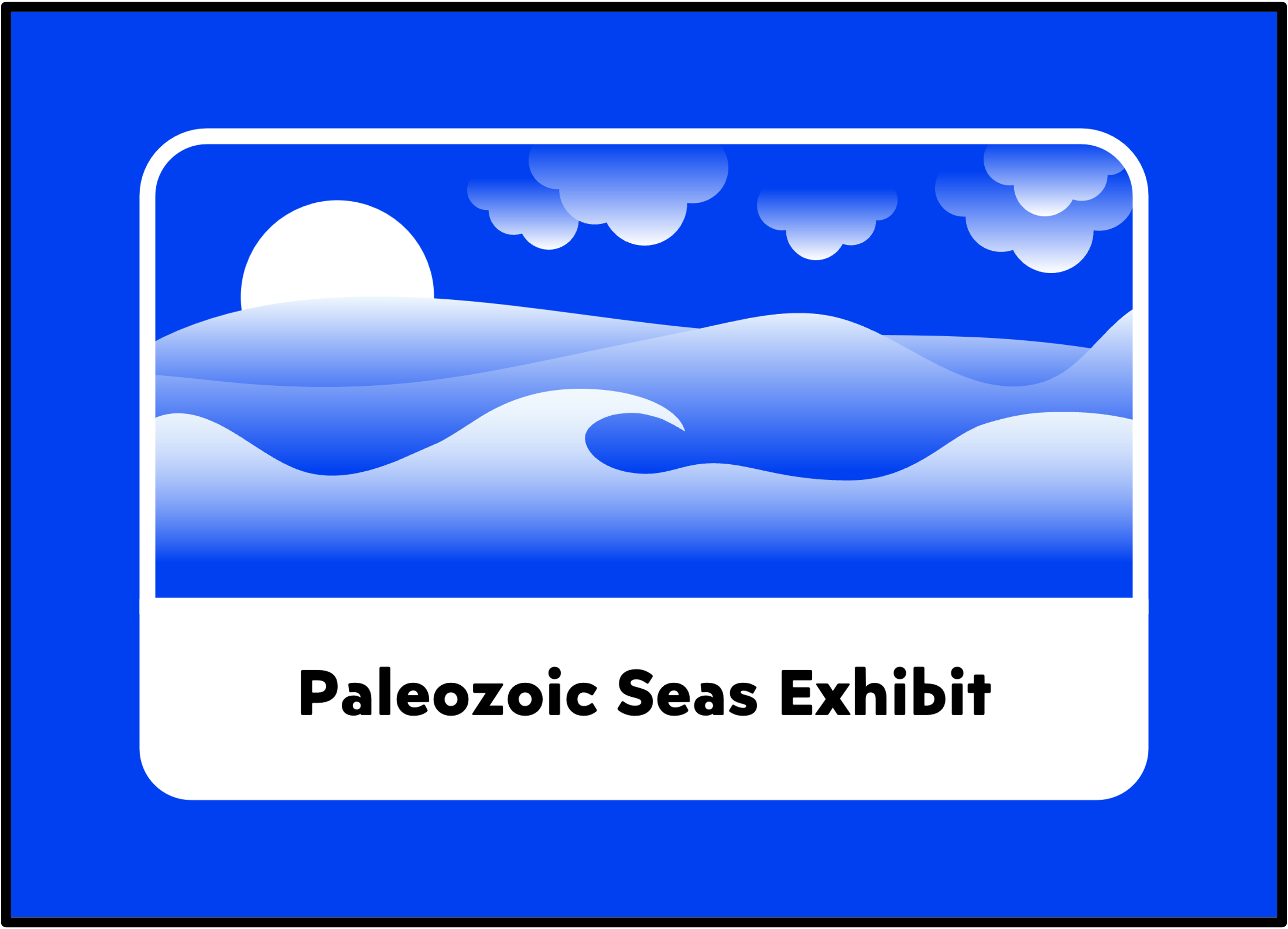
Example: Dr. Megan Era curates Miocene Savannah, Paleozoic Forest , and Paleozoic Seas exhibits.
Turn Order (also on back of Curator cards)
- Discard any number of cards from your hand.
- Draw back up to eight cards.
- Trade cards with other players, if desired.
- Play up to two cards from your hand; if necessary, resolve card effects.
- Continue to the next player, clockwise.
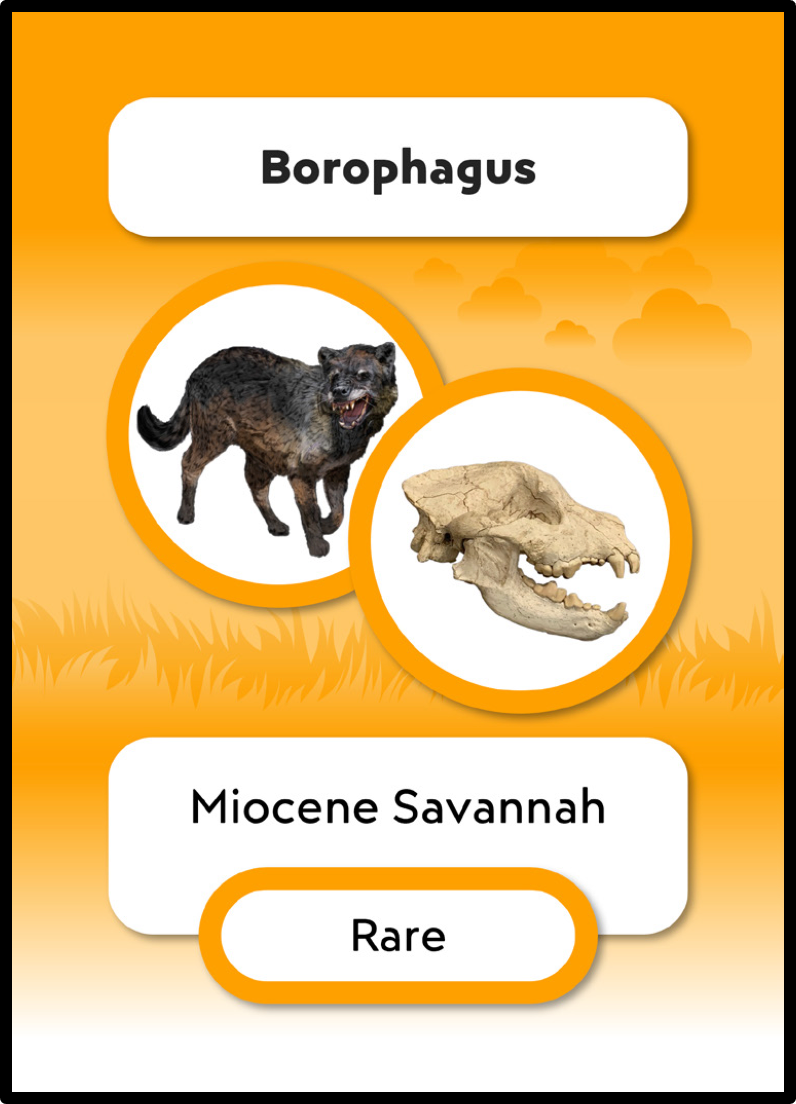
Fossil Cards
- Fossils can only be played on their corresponding Exhibit (e.g., “Miocene Savannah” Fossils can only be played in the “Miocene Savannah” Exhibit).
- Exhibits can’t have duplicate Fossils in them (e.g., you may not play two Borophagus cards in your Miocene Savannah Exhibit).**
- Fossils are labeled as either Common, Uncommon, or Rare depending on how plentiful they are in Kansas.

Action Cards
- Long-term Action cards grant a continual bonus as you progress through the rounds of the game, such as playing more than two cards per turn, keeping more than eight cards in your hand, etc. Play these cards by attaching them to an Uncommon or Rare fossil card that you have already played in one of your exhibits. You can only attach one Action Card to a given Fossil card.
- Long-term Action cards: A FINE SPECIMEN, COLLECTIONS EXPANSION, GRANT, INCREASED SPACE, SECURITY UPGRADE, SPECIALTY
- Immediate play Action cards give you an instant bonus, such as drawing more cards or stealing from another player. Complete this action as soon as you play the card, then discard it.
- Immediate play Action cards: BUDGET CUTS, PUBLIC INTEREST, POACHING, IMPROPER PROCEDURE, FAKE!
*The “A FINE SPECIMEN” Action card, when attached to an Uncommon or Rare Fossil card you’ve already played in one of your Exhibits, counts as a specimen toward that Exhibit’s total.
**The “SPECIALTY” Action card, when attached to an Uncommon or Rare Fossil card you’ve already played in one of your Exhibits, permits you to play duplicate Fossil cards in that Exhibit.
About the Curator Ecosystem Exhibit Groups
Land Life (Dr. Amy Bellows): The Miocene Savannah, Paleozoic Forest, and Pleistocene Tundra ecosystems were terrestrial.
Ancient Ages (Dr. Bryan Zoa): The Paleozoic Forest, Cretaceous Seas, and Paleozoic Seas ecosystems are the oldest in the game.
Colossal Creatures (Dr. Castor Oden): The Miocene Savannah, Pleistocene Tundra, and Cretaceous Seas ecosystems were home to the largest organisms.
Warm Worlds (Dr. Megan Era): The Miocene Savannah, Paleozoic Forest, and Paleozoic Seas ecosystems had the hottest climates.
Big Biomes (Dr. Terry Don): The Cretaceous Seas, Paleozoic Seas, and Pleistocene Tundra ecosystems covered the greatest physical area.
About the Ancient Ecosystems of Kansas
Kansas is one of the best places in the United States for fossil hunting. Layers of rock from many different time periods reveal a plethora of fossils. The fossil exhibits in this game—Paleozoic Seas, Paleozoic Forest, Cretaceous Seas, Miocene Savannah, and Pleistocene Tundra—are the dominant ancient ecosystems evident in Kansas rocks.
Paleozoic Seas (360–250 million years ago)
Many layers of exposed limestone across eastern Kansas are filled with invertebrate fossils. These fossils represent coral reef communities that lived during the Carboniferous and Permian Periods. These periods mark the second half of the Paleozoic Era, millions of years before dinosaurs existed. During this time, Kansas was covered by a warm, shallow sea that hosted a variety of early marine life like coral, snails, clams, and the first fish.
Paleozoic Forest (360–250 million years ago)
The first widespread forest in Earth’s history grew during the Paleozoic. Ferns and horsetail, plants we still see in Kansas today, developed in swampy forest areas during this time. Newly evolved insects were at their largest: Meganeura was a dragonfly the size of a hawk. Early amphibians like Diplocaulus hunted in Paleozoic swamps, and the first reptiles, such as Petrolacosaurus, crawled among the branches of massive trees.
Cretaceous Seas (100–66 million years ago)
Tens of millions of years after the Paleozoic Era, Kansas found itself underwater in the late Cretaceous Period. Across western and central Kansas are massive deposits of chalk and limestone filled with marine fossils from the Western Interior Seaway. Some of the largest marine predators in Earth’s history—like mosasaurs, plesiosaurs, and sharks—patrolled the seaway. Our state fossils come from these rock layers.
- Tylosaurus, our state marine fossil, was a mosasaur (a marine reptile) that swam our ancient seas.
- Pteranodon, our state flying fossil, patrolled the sky like an ancient shorebird.
- Silvisaurus, our state land fossil, lived near the beach and is the only known Kansas dinosaur.
Miocene Savannah (23–5 million years ago)
After the extinction of the dinosaurs, the seas retreated and the world was warm and wet. This was the Age of Mammals. During the Miocene, Kansas was a savannah dominated by camels, rhinos, elephants, and tortoises. Borophagus, a hyena-like dog, was the top predator of this environment. Layers of Miocene rock are exposed across central and western Kansas.
Pleistocene Tundra (2.5–less than 1 million years ago)
As the world cooled, glaciers crept down from the north and created a chilly tundra in Kansas. Huge megafauna like mammoths, mastodons, giant ground sloths, and short-faced bears lived in this environment. Major Kansas rivers developed during this time, and Pleistocene fossils can be found along their banks.
Buying SPECIMANIA
Copies of SPECIMANIA are available for $30 from the Kansas Geological Survey!
- Pickup: Purchase SPECIMANIA from the KGS front desk at 1930 Constant Avenue, Lawrence, KS 66047. The KGS is open 8am-5pm Monday through Friday (excluding holidays).
- Shipping: Contact KGS Outreach at kgssocials@ku.edu with the subject line "Shipping SPECIMANIA" and provide a shipping address in your message.
More Information
You can learn more about these ancient environments and the fossils featured in SPECIMANIA on the Kansas Geological Survey website at geokansas.ku.edu/fossils-kansas.- Concept, Research, and Gameplay:
- Andy Connolly
- rangerconnolly@gmail.com
-
Graphic Design: - Sunday Siomades
- ssiomades@ku.edu
-
Paleo-artwork: - Corbin Rainbolt
- @paleo_kc
rainboltpaleoart.com